Two Very Different Waste Streams
It's easy to assume all debris ends up in the same place, but Gaston County's Solid Waste Department treats yard waste and construction & demolition (C&D) debris as genuinely separate streams, each processed differently once it leaves your property. Knowing which category your project falls into — and sometimes it's both — makes a real difference in how it should be handled and what container setup fits best.
What Counts as Yard Waste
Yard waste covers grass clippings, leaves, brush, tree limbs and general landscaping debris — material that's organic and compostable rather than building material. Gaston County's Solid Waste Department operates a dedicated yard-waste facility specifically because this material is processed differently than general trash or construction debris, and the City of Gastonia's residential green-cart garbage system is built around household trash, not large-volume yard debris. A landscaping cleanup, storm-damaged tree removal, or general lot-clearing project generally falls under this category.
What Counts as Construction & Demolition Debris
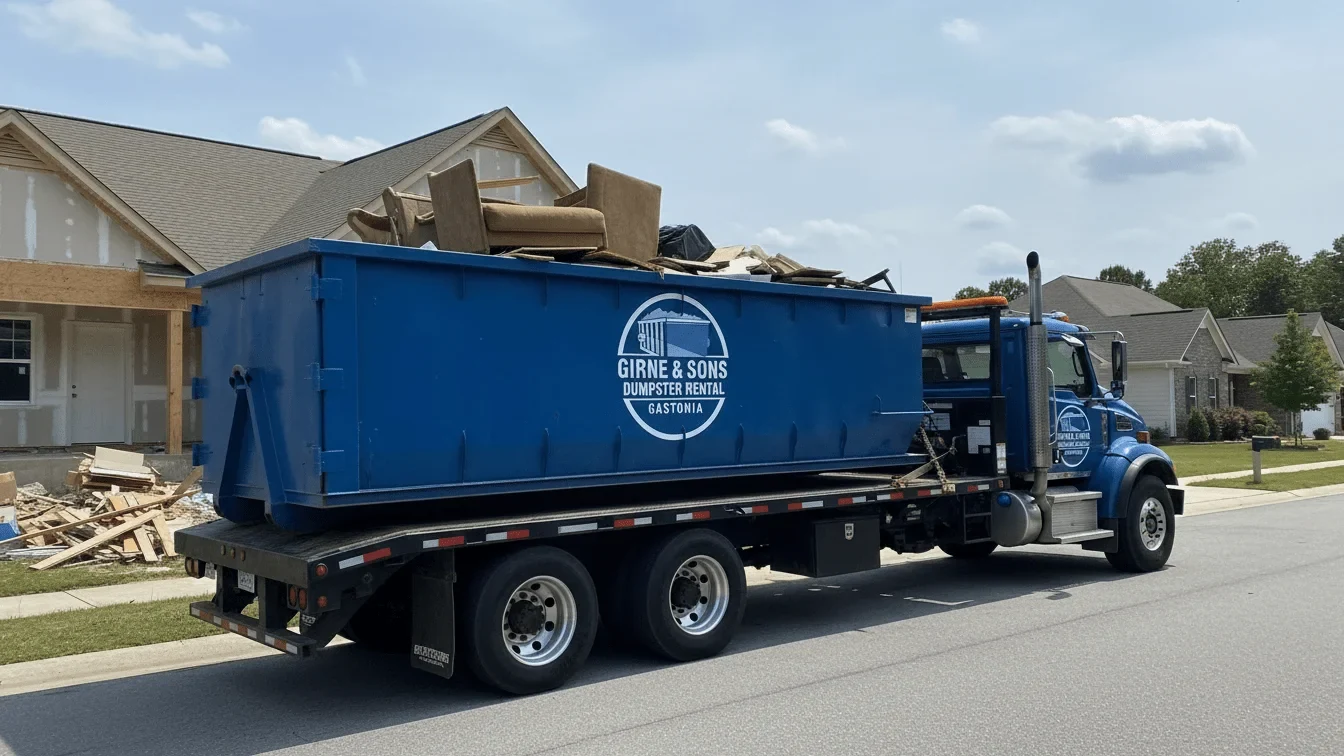
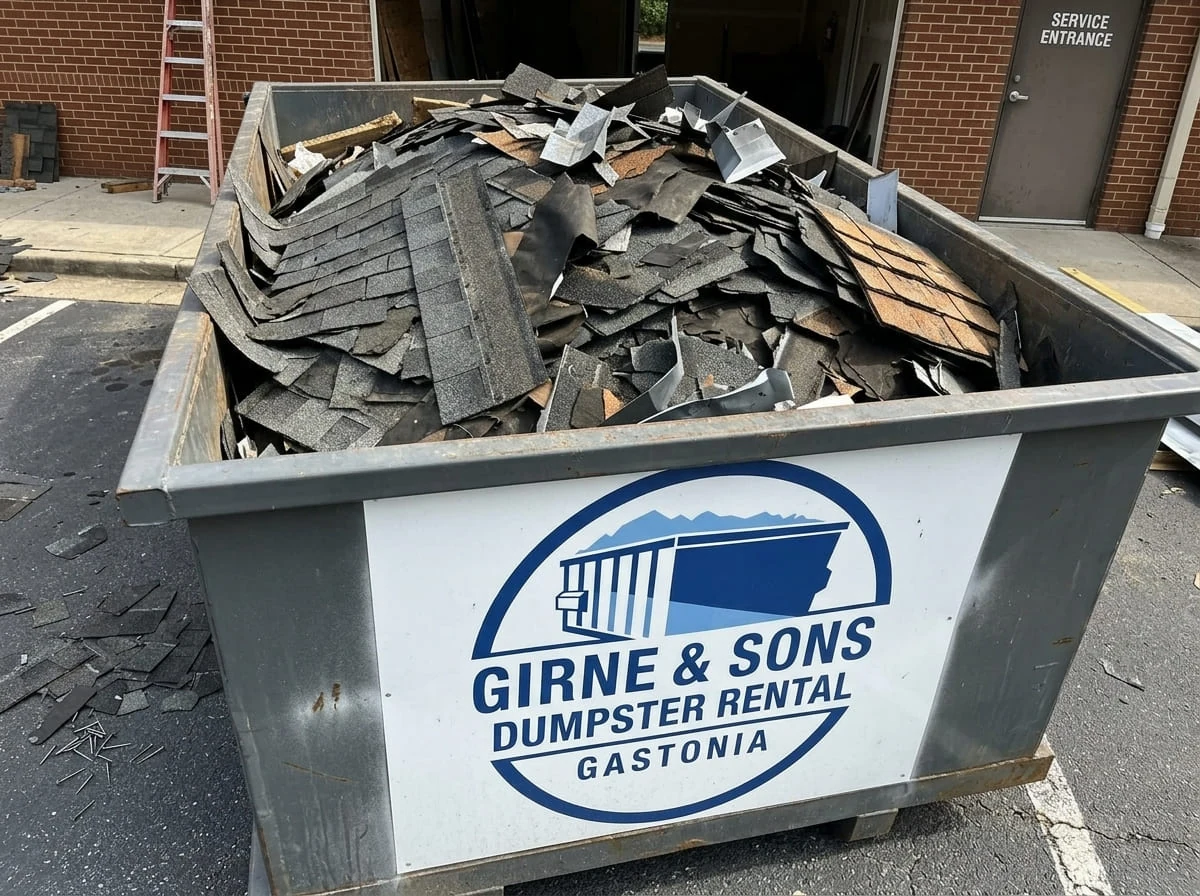
The Gaston County Landfill accepts Class 4 construction and demolition debris separately from Class 1 municipal solid waste — this is the category for roofing material, drywall, lumber, flooring, masonry, tile and general renovation or demolition debris. It's a heavier, denser waste stream than yard waste, and it's the category most residential dumpster rentals through us actually fall into: kitchen and bathroom remodels, roof tear-offs, whole-home renovations and new-construction cleanup.
What's Never Allowed in Either
Some materials aren't accepted in either stream, whether you're using the city's bulk-waste program or a private roll-off. Automobile parts and batteries, dirt, rocks, loose concrete and ceramic tile, liquids, poisons and explosives are all excluded from the city's Free Excess Trash Week guidance, and the county landfill does not accept hazardous materials of any kind. If your project generates any of these, it's worth asking us directly — some (like concrete or dirt) may need a specialized container or hauler rather than a standard roll-off.
Choosing the Right Container for Your Job
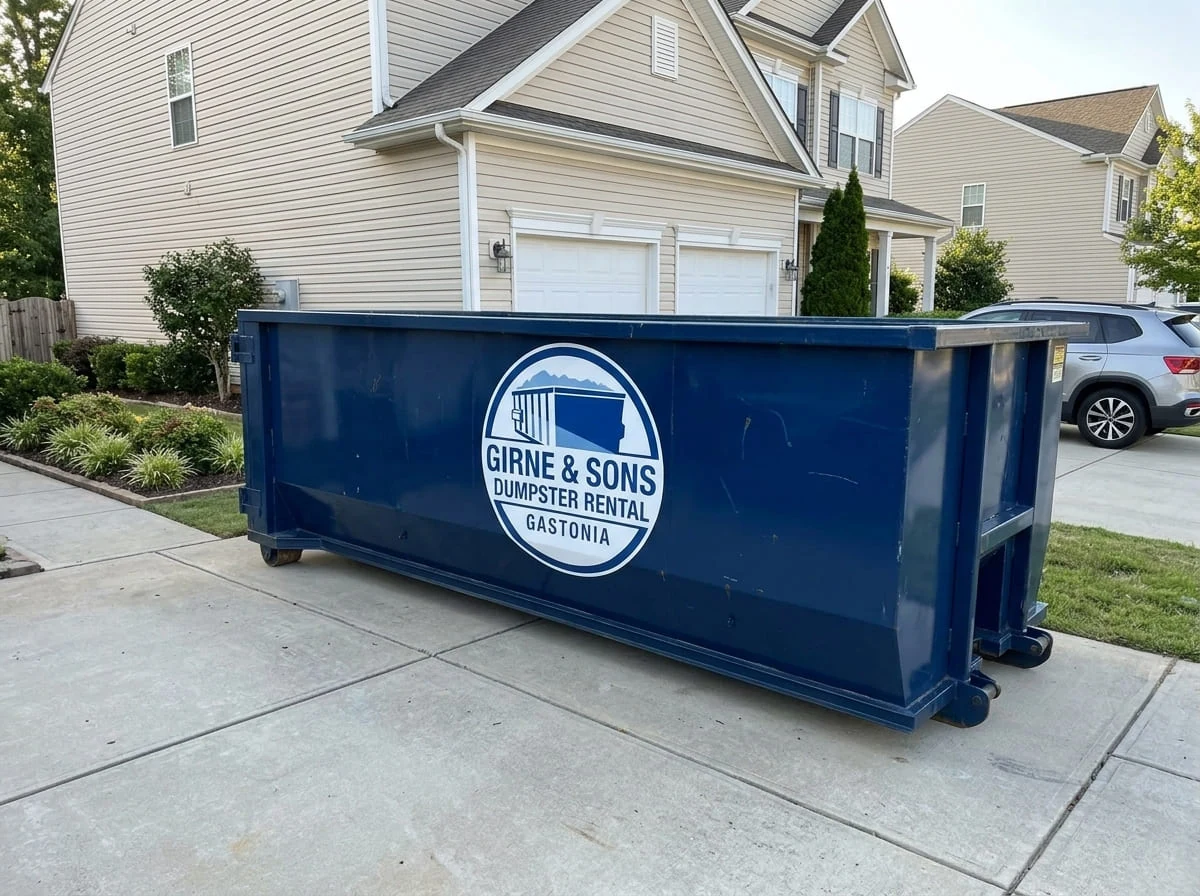
If your project is purely yard and landscaping debris, a smaller container — often a 10 or 15 yard — is usually enough, since yard waste tends to be bulky but relatively light. If it's construction or demolition material, weight becomes the bigger factor, and a 20 yard or larger is more typical even for a modest-sized job. And if your project genuinely mixes both — say, a renovation that also involves clearing an overgrown yard — tell us that when you call so we can size and, if needed, sequence the right containers for both streams.
Why the Distinction Actually Matters
It's tempting to treat "yard waste" and "construction debris" as a formality rather than a real distinction, but the county's own infrastructure is built around keeping them apart — a dedicated yard-waste facility exists precisely because organic debris is processed differently than building material on the back end. Mixing the two in one load doesn't just complicate sorting; it can mean material that could otherwise be composted or mulched ends up handled as general construction debris instead. Keeping the two separate when you can is a small step that makes the whole system work better.
When a Project Genuinely Straddles Both
Plenty of real Gastonia-area jobs don't fall neatly into one category — a whole-property cleanup ahead of a home sale, for instance, might involve clearing an overgrown yard and pulling out old fencing or a shed at the same time. In cases like that, the practical answer isn't to force everything into one container type; it's to have an honest conversation about what's actually coming off the property so we can size (and if needed, sequence) the right combination of containers for the job.