From Textile Giant to a Landmark Labor Story
Loray Mill was one of the largest textile mills in the South at its peak, and it became the epicenter of the 1929 Loray Mill Strike — a pivotal event in American labor history. The National Textile Workers Union held its first public meeting on March 30, 1929; roughly 1,800 workers walked out on April 1, demanding a 40-hour week, a set minimum weekly wage, union recognition and an end to the "stretch-out" system. Governor O. Max Gardner sent 250 National Guard troops on April 3. Masked vigilantes destroyed the union's headquarters on April 18. On June 7, Gastonia Police Chief Orville Aderholt was killed during a confrontation at the strikers' tent city. Strike leader and balladeer Ella May Wiggins was shot and killed on September 14, 1929, on a road roughly five miles from Gastonia while traveling to a union meeting, and the strike collapsed in the aftermath. It's a heavy piece of local history, and it's worth knowing before you ever set foot in the building the mill has become.
From Mill to Loft: The 2016 Redevelopment
Loray Mill — found in one construction-sale record as originally built in 1902, though that exact date wasn't independently cross-checked against a dedicated architectural-history source — was renovated in 2016 into a mixed-use, adaptive-reuse project: 189 apartments and roughly 75,000 square feet of commercial space, spread across a roughly 600,000-square-foot historic building on 12 acres at 300 S. Firestone St. In September 2022, the property sold to Atlanta-based TriBridge Residential, brokered by Matthews Real Estate Investment Services, for a sum reported in the tens of millions — one of the clearest "historic mill becomes modern housing" stories anywhere in Gastonia.
Why Gaston County Has So Much Mill-Village Housing to Renovate
Loray Mill Lofts is the most visible example, but it's part of a much larger pattern across Gaston County. Textile milling took off almost immediately after Gastonia's founding — the Gastonia Cotton Manufacturing Company was chartered in December 1887, and by 1895 the original mill was running roughly 12,000 spindles and 140 looms. Towns across the county, including Cramerton, Lowell and McAdenville, trace their origins directly to mill villages built to house that workforce in the late 1800s and early 1900s. The result is a county with a genuinely deep stock of century-old worker housing — smaller lots, older construction methods, and homes that have been renovated, re-renovated, and renovated again as they've changed hands over more than a hundred years.
What This Means for Your Dumpster
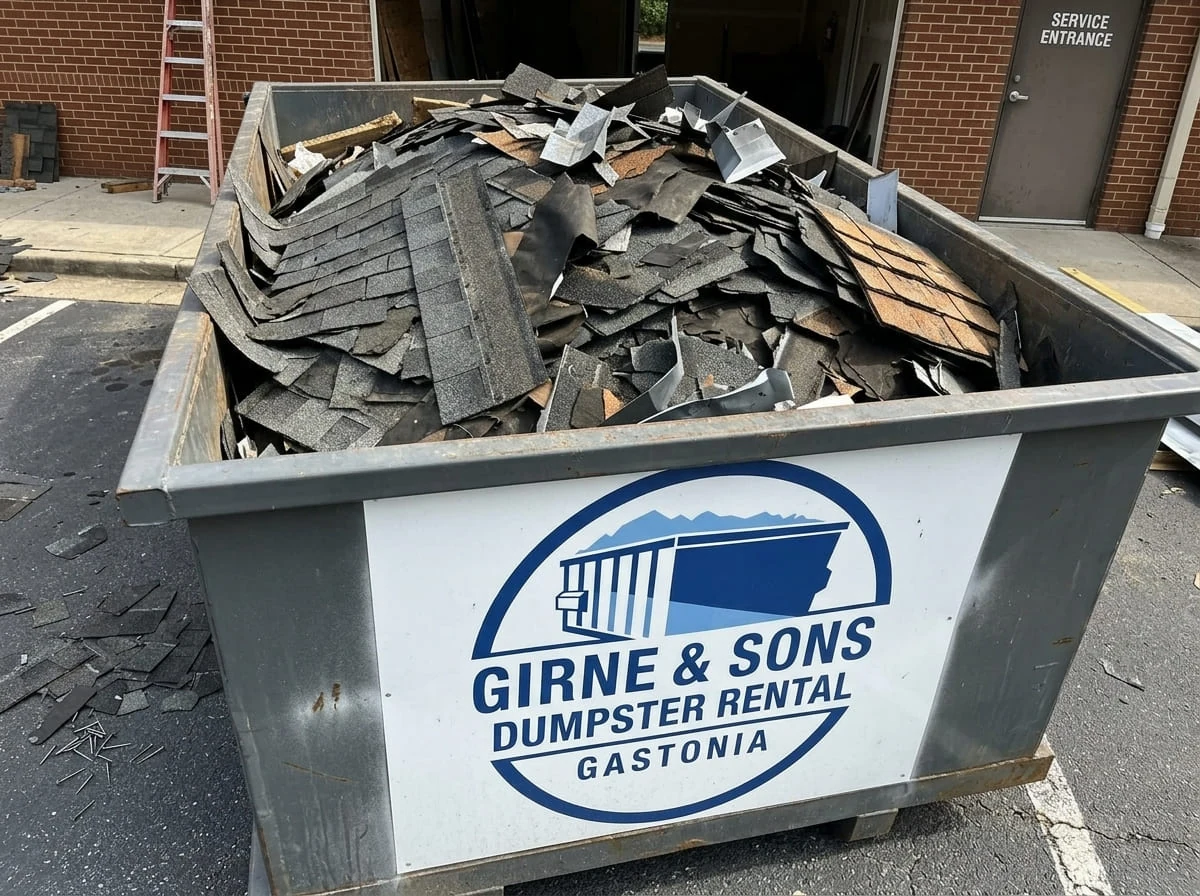
Homes from this era typically come with plaster walls instead of drywall, older single-pane windows, and original hardwood or heart-pine flooring worth pulling carefully rather than demolishing outright. Debris from a project like this tends to run heavier per square foot and more varied than a comparable newer-home remodel — plaster and lath, in particular, weigh noticeably more than modern drywall covering the same wall area. Most gut renovations in a mill-era Gastonia home land in the 20 to 30 yard range once demolition gets underway, though a full whole-house project can push toward a 30 or 40 yard.
Working Around Historic Streets and Structures
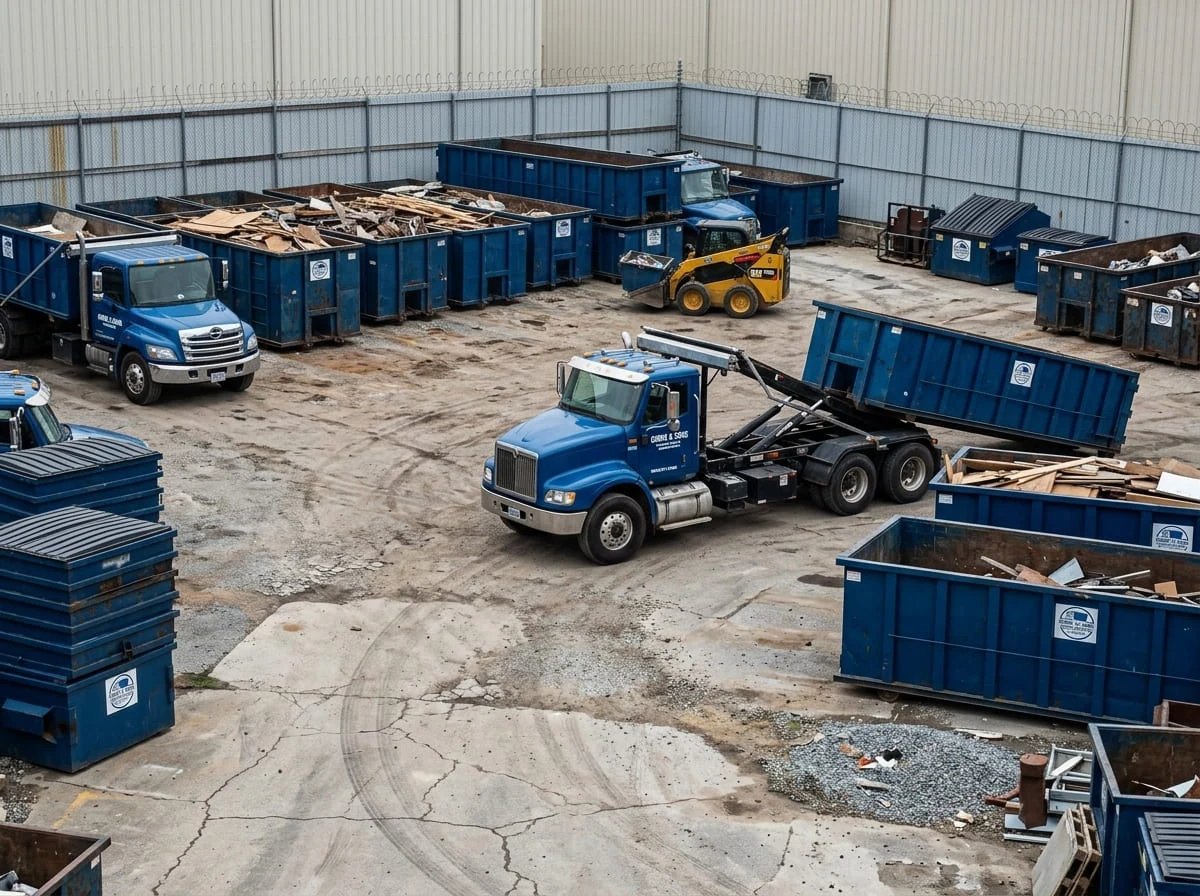
Mill-village blocks were laid out well before a modern roll-off truck was ever a consideration — narrower streets, tighter lots, and in some cases limited parking near the property line. We plan placement with that in mind: protection under the container's rails on an older driveway, positioning that keeps the load path clear of anything you're keeping, and a straightforward conversation up front about exactly where on the lot the container should sit. Whether your project is a block from Loray Mill itself or in a mill-village neighborhood on the other side of the county, that's the same question we ask every time.