Yard Waste vs. Construction Debris: What's Allowed in Gaston County
Yard waste and construction debris are handled by different systems on the back end. Here's how to tell them apart, and which one your project actually falls under.
ReadGastonia, NC guide
A whole-home renovation generates debris in waves, not all at once. Here's how to plan dumpster size and timing across every phase of the project.
Gastonia's housing stock spans well over a century — from mill-era homes built during the city's 1887–1895 textile boom, to mid-century construction, to new-build housing rising in the southeastern growth corridor the city's own planning documents have identified as its fastest-growing area. That range means "whole-home renovation" means something different depending on where in Gastonia the project sits, but the debris planning follows the same basic pattern everywhere.
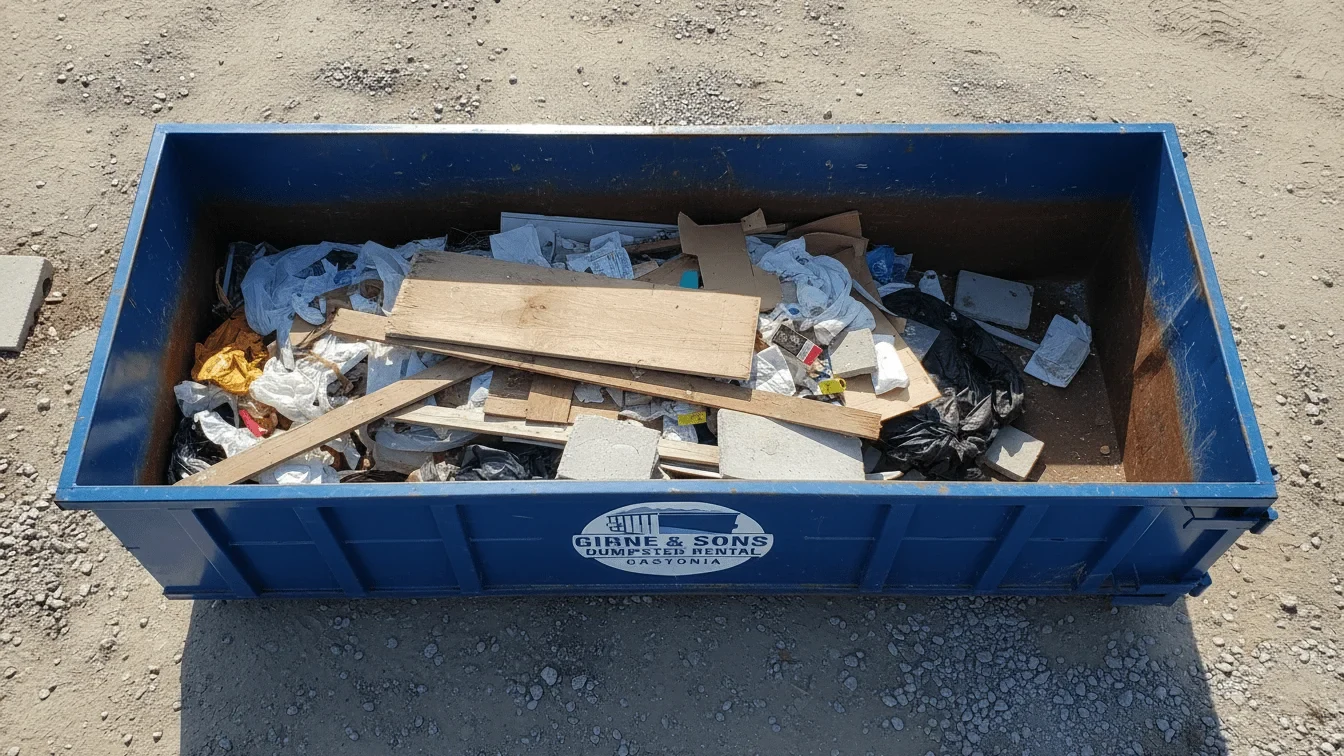
Most full renovations move through three distinct debris phases rather than generating one uniform stream of material. Demolition comes first — old flooring, cabinetry, fixtures, drywall and sometimes plaster and lath in an older home — and it's almost always the heaviest, fastest-generated phase, often filling a container within the first few days of work. A quieter middle stretch follows during framing and systems work (electrical, plumbing, HVAC), generating comparatively little debris. Finishing work brings a second, lighter wave — packaging, trim offcuts and paint materials.
Demolition debris from an older Gastonia home often includes plaster and lath, original hardwood flooring being replaced, and older single-pane windows — materials that run heavier per square foot than what you'd pull from a newer home's demolition. Framing and systems debris is lighter but can include cutoffs of new lumber and old wiring or piping. Finishing-phase debris is the lightest of the three, mostly cardboard and packaging from cabinetry, fixtures and flooring deliveries.
Most whole-home renovations in Gastonia do best with an initial larger container for the demolition phase — typically a 20 or 30 yard depending on the home's size and age — followed by a smaller container for the lighter finishing-phase debris, rather than one size sitting mostly empty in the middle of the project. Larger homes, or renovations on older properties with heavier demolition material, sometimes call for a 30 or 40 yard for the initial phase.
The biggest scheduling mistake on a whole-home renovation is booking one container for the entire project timeline and hoping it works out. A sequenced approach — sized and scheduled around each phase rather than the project as a whole — keeps the container relevant to what's actually happening on-site instead of sitting mostly empty for weeks during framing. Call and describe your renovation's scope and rough timeline, and we'll help you plan the sequence rather than guessing at one size for everything.
A whole-home renovation usually means several trades moving through the same property over weeks or months — a general contractor overseeing demolition, then electricians, plumbers and HVAC crews, then flooring, cabinetry and paint. Each trade tends to generate its own small wave of debris and packaging on top of the three broader phases above. We're used to working directly with a general contractor's schedule rather than just the homeowner's, including swapping a container mid-project if a trade's timeline shifts or a phase runs longer than planned.
For a whole-home renovation, placement matters more than it does for a one-day job, simply because the container is going to sit in the same spot for weeks. We'll walk the driveway or yard with you before the truck ever unloads, talk through where the container needs to sit relative to dumpsters or equipment already on-site, and make sure protection is down before the box touches the ground. Getting that right on day one saves a headache later in a project that's already going to have plenty of moving parts.
Talk to a real person
Call and describe the job. Flat price, stated tonnage, and a delivery time on the same call.
Mon–Sat 7:00am – 6:00pm
From this guide
Often several, in sequence — a larger container for the demolition phase, followed by a smaller container for lighter finishing-phase debris, rather than one size for the entire project.
Most whole-home renovations start with a 20 or 30 yard for demolition, with larger homes or heavier demolition material sometimes calling for a 30 or 40 yard.
Often, yes — older homes can include plaster and lath, original hardwood flooring and older windows, all of which tend to run heavier than comparable materials in a newer home's renovation.
Yes — call (980) 238-2816 and describe your project's scope and rough timeline, and we'll plan a sequence sized to each phase rather than one container for the whole job.
Keep reading
Yard waste and construction debris are handled by different systems on the back end. Here's how to tell them apart, and which one your project actually falls under.
ReadA 5,000-seat stadium opened downtown in 2021, and the neighborhood around it has kept changing since. Here's what new development near CaroMont Health Park means for Gastonia debris work.
ReadGastonia keeps adding residents inside one of the fastest-growing metro regions in the Southeast. Here's what that growth means for sizing a dumpster on a new-construction job.
Read